Calik, D.M., Lin, F., Edgar, M., Kennedy, C.J., Johnston, E.F., Farrell, A.P., Gillis, T.E.*, Alderman, S.L.* (2025). Aquatic Toxicology 283:107347.
*co-senior authors
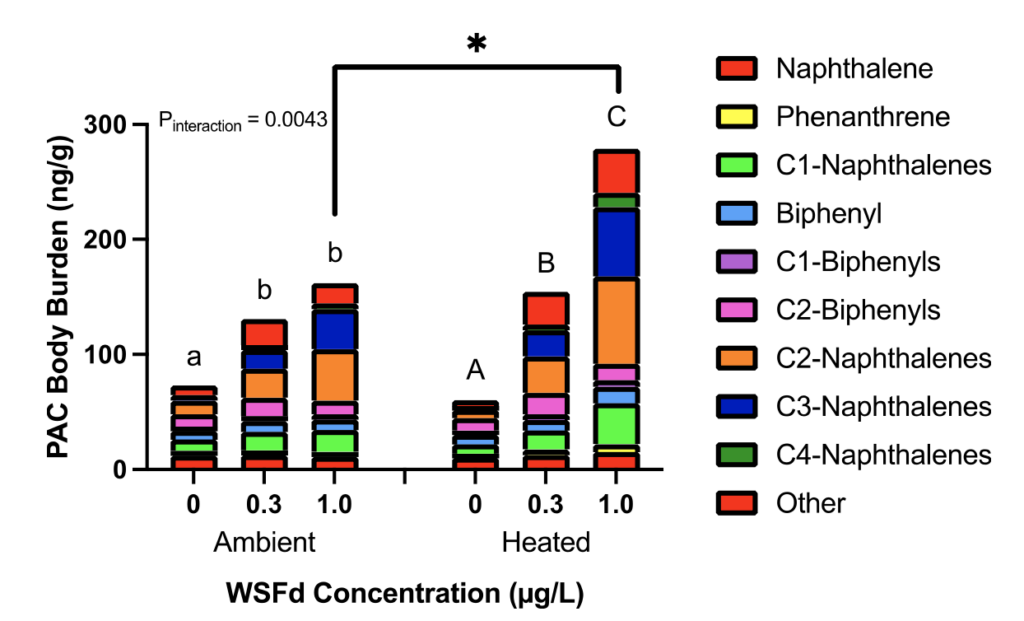
Abstract: Heavy crude oil, like bitumen, is used globally for plastics, petrochemicals and road surfacing. Canada’s oil sands are the world’s third largest crude oil reserve, and diluted bitumen (dilbit) is transported across North America primarily via pipeline and rail. Two environmentally-relevant concentrations of dilbit were used with a suite of toxicological endpoints to determine if a 3 ◦C increase in ambient temperature (Ta) water modulated the effects of dilbit to coho salmon (Oncorhynchus kisutch) when exposed from fertilization to swim-up. The 10–20 % increase in mortality and 25 % reduction in hypoxia tolerance with dilbit exposure was magnified by 18 % and 40%, respectively, in warmer water. Consequences of dilbit exposure persisted after 6 weeks of additional rearing in clean Ta water but were greatest in fish exposed to dilbit at elevated temperature: additional 20 % mortality and 30 % decrease in mass relative to controls, and a residual 20 % reduction in hypoxia tolerance not seen with
dilbit exposure alone. Relatively lower induction of the Phase I biotransformation enzyme cyp1a and greater tissue PAC content in warm-exposed coho suggests reduced PAC metabolism as a mechanism for the observed potentiation. Thus, seasonal fluctuations and baseline increases in water temperature from climate change can
exacerbate the adverse effects of oil spills on developing fish.