
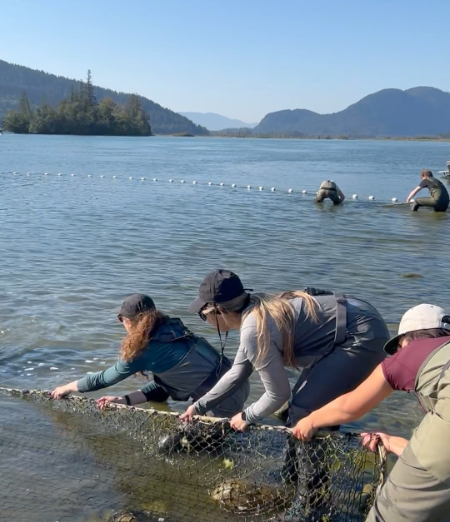
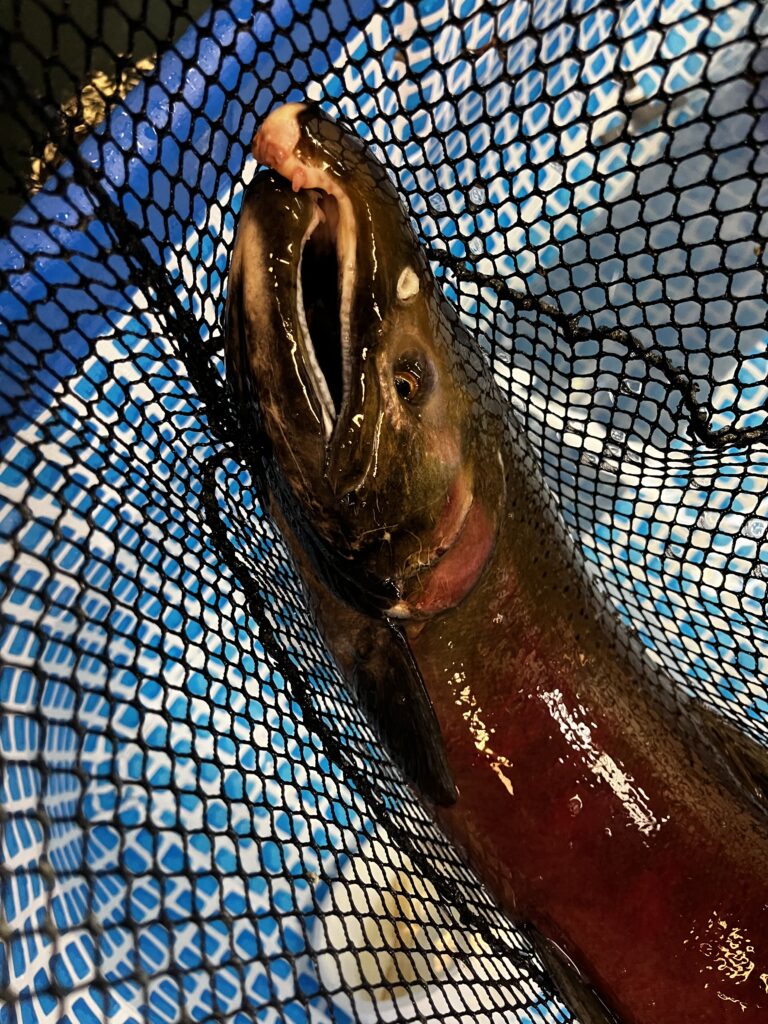
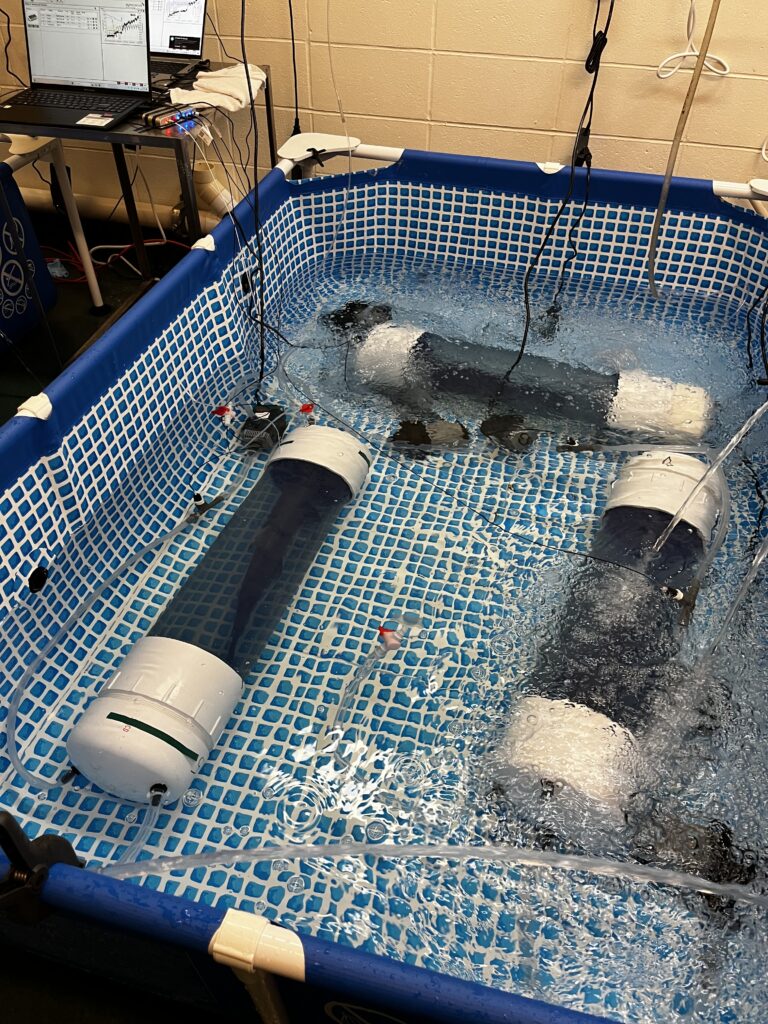
The Trans Mountain Pipeline (TMP) carries crude oil products, including diluted bitumen (dilbit), through sensitive regions of the Fraser River Watershed (FRW), Canada’s largest salmon-bearing system. Spills from the TMP have occurred at an average rate of 1.3 per year since 1961, raising significant concerns about potential environmental contamination of the FRW and its impact on the long-term stability of Pacific salmon populations. These fish hold high socioeconomic value to all Canadians, especially Indigenous Peoples. Pacific salmon have a complex life history that bridges freshwater and marine ecosystems, and a combination of life stages may be present in the receiving environment at the time of a spill, depending on when and where a spill occurs. Thus, Pacific salmon pose a unique challenge in spill response planning and impact assessments, which requires life stage specific data. Since 2014, the team led by Profs. Alderman (Guelph), Farrell (UBC), Gillis (Guelph) and Kennedy (SFU), has been building a knowledge base on the consequences of environmentally-relevant dilbit exposures to early life stages of salmon, including impacts on performance metrics, developmental effects, persistence/latency of toxic responses, life stage specific sensitivities, confounding effects of abiotic factors on dilbit toxicity, and development of biomonitoring tools for impact assessment. A key uncertainty is the impact of a pipeline spill on returning adult salmon. Contamination of the FRW during the spawning migration could have a profound impact on salmon populations by (i) reducing the number of fish that reach the spawning grounds, (ii) impairing spawning success, and (iii) reducing the fitness of progeny. This project aims to address these concerns and will generate data on key fitness metrics to build a predictive population impact model to aid spill managers in mitigation decisions. Publications that have resulted from this work include: Alderman, et al., 2016 ; Alderman et al., 2017 ; Lin et al., 2022; Perugini et al., 2022; and Calik et al., 2025.