
Sea lamprey (Petromyzon marinus) are an invasive species in the Laurentian Great Lakes. Their life cycle includes a 12-18 month phase during which they are hemophagic ectoparasites that consume blood from their host fish, including commercially and ecologically valuable lake trout (Salvelinus namaycush). While many host fish survive a sea lamprey parasite attack, the long-term consequences of this encounter include reduced fitness. We are working to better understand the physiological responses to sea lamprey parasitism, with the aim of developing quantitative tools that link the severity of a sea lamprey encounter with host outlook.
Projects
1. BIOMARKERS OF SEA LAMPREY PARASITISM
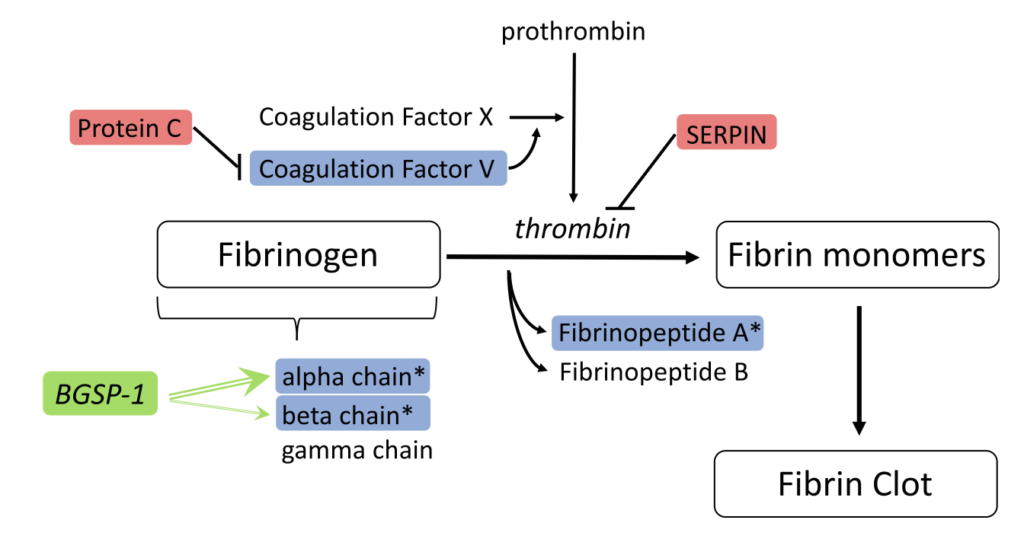
During feeding, the sea lamprey parasite inhibits host blood coagulation while the host fish activates compensatory responses to blood loss. Understanding the dynamic and quantitative relationships between these competing interests can help us identify biomarkers that estimate the severity of a sea lamprey attack and predict the impact on host fitness.
image: Clotting cascade showing several proteins altered by sea lamprey parasitism in lake trout blood [pink: up-regulated; blue: down-regulated; green: lamprey secretion; asterisk: long-term response]. From: Bullingham et al., 2022
2. METABOLIC RESPONSES TO SEA LAMPREY PARASITISM
Host fish that survive a sea lamprey attack must restore blood composition and volume, heal damaged tissue, and potentially fight secondary infection. This combination of reduced oxygen carrying capacity and increased energetic demand may impair metabolic capacity of host fish. We are quantifying this metabolic response to better understand the physiological mechanisms that underpin reduced host fitness following a sea lamprey parasite encounter.
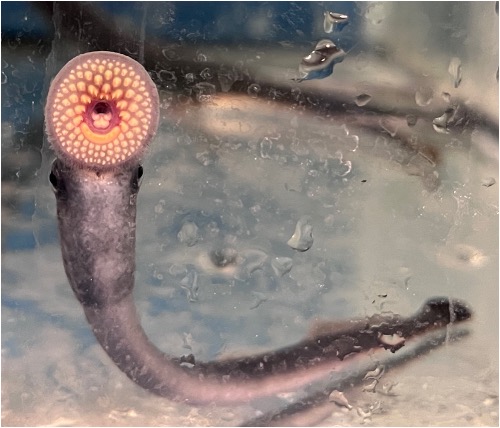
image: A sea lamprey parasite attached to aquarium glass with its oral disc. Photo credit: S. Alderman
Funding

Collaborators
Dr. Cheryl Murphy, Michigan State University (Project 1)
Dr. Frederick Goetz, University of Wisconsin-Milwaukee (Project 1)
Dr. Tyler Firkus, University of Wisconsin-Stevens Point (Project 1)
Dr. R. Darren Wood, Ontario Veterinary College, University of Guelph (Project 1)
Dr. Todd Gillis, University of Guelph (Project 2)