
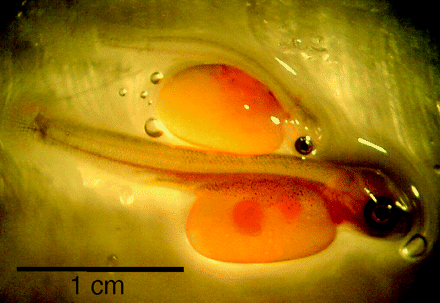
Chronic hypoxia (30% O2 saturation) incubation from fertilization results in delayed development and growth in trout embryos. These two embryos are the result of the same fertilization event. (Miller et al., 2011)
Environmental hypoxia is an increasing challenge for aquatic species living near shore environments. This is due, at least in part, to eutrophication caused by human activates. Work in the Gillis lab has been examining the influence of environmental hypoxia on the development and function of the cardio respiratoy system in fish. As an undergraduate, Silvana Miller demonstrated that hypoxia exposure reduced the metabolic rate of trout embryos and caused premature hatching. For her MSc research Silvana focused on the ontogeny of cardiac regulation in trout early life stages and how it is influenced by chronic hypoxia. Her results demonstrated that in normoxic conditions cardiac β-adrenergic receptors are functional at early life stages, while cholinergic receptors are not responsive until after hatch. Chronic hypoxia exposure triggered bradycardia, increased the response to adrenergic stimulation, and delayed the onset of cholinergic control in larvae. In non-motile stages, therefore, survival in chronic low oxygen may depend on the ability to alter the cardiac ontogenetic program to meet the physiological requirements of the developing fish.
More recent work by MSc student Elizabeth Manchester (Manchester and Gillis, 2025) has demonstrated that chronic hypoxia exposure of zebrafish increased cardiac output of hypoxia-acclimated fish and that this was due, at least in part, to higher cardiac stroke volume. Histological measurements demonstrated an increase in the cross-sectional area of the ventricle of hypoxia-exposed fish and this was supported by higher end diastolic area measurements made using ultrasound. These changes to the heart occurred in conjunction with an increase in haematocrit and the respiratory surface area of the gills, as well as an improved capacity of the fish to respond to a more severe acute hypoxia challenge. These results suggest that, unlike normoxia-acclimated fish which demonstrate a decrease in cardiac output with acute hypoxia exposure, zebrafish acclimated to hypoxia maintain cardiac output when acutely exposed to hypoxia.
