
Alderman, S.L. (2024) Encyclopedia of Fish Physiology 2nd edition, Volume 1, pp 233-241.
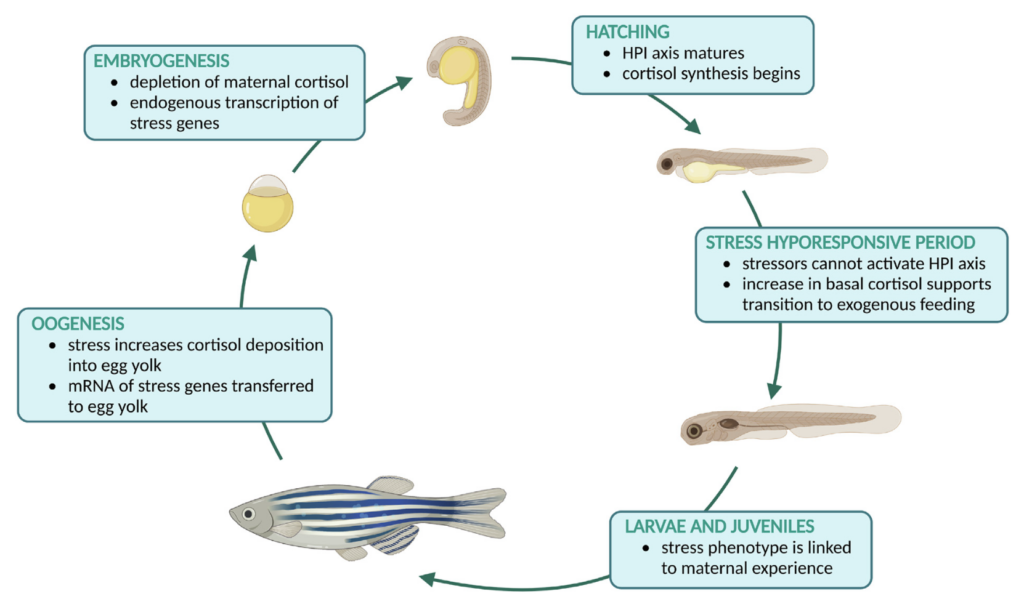
Abstract: The development and maturation of the hypothalamus-pituitary-interrenal axis (HPI axis) determines when a fish will be able to respond to environmental stressors through active and integrative homeostatic regulation. Studies from zebrafish provide a comprehensive overview of HPI axis development. Key genes are expressed within HPI axis structures shortly after they are formed, and endogenous cortisol synthesis begins around hatching and increases as the fish prepares for
exogenous feeding. Activation of the HPI axis in response to a stressor is delayed relative to the onset of endogenous cortisol synthesis, supporting a stress hyporesponsive period that may help protect fish larvae during a critical window of development. At the same time, many players in the HPI axis, including corticotropin-releasing factor and cortisol, can modulate embryo phenotypes even before the HPI axis has fully formed and matured. The fact that many of these same components are transferred from female fish into egg yolk suggests a mechanism for transgenerational environment-phenotype matching in the context of stress.